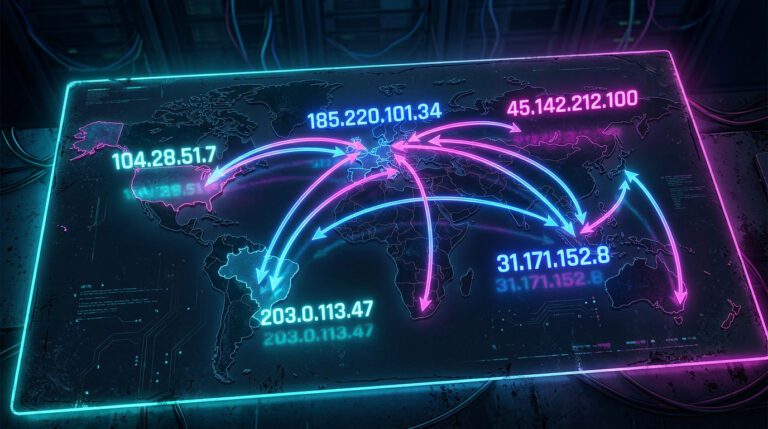

Proxy market is thriving and there are many types of proxies to choose from. In this article we’ll learnabout datacenter proxies in particular. Datacenter proxy is a powerful tool for different kinds of businesses and individuals seeking to improve results of their online activities. If you are involved in web scraping, market research, or SEO monitoring, datacenter proxies might be usefull for you.
What is Datacenter Proxy?
Datacenter proxies are intermediary servers hosted in data centers. Unlike residential proxies, they are not affiliated with an ISP, wich means that your IP adress will be hidden. With that being said, datacenter proxies provide users with quick connection and anonimity.
Datacenter proxies are usually sourced from cloud service providers and hosting platforms like AWS, Google Cloud, or OVH. These proxies offer great solutions, helping businesses secure their online presence and ensuring efficient and fast operations.
How Do Datacenter Proxy Works?
As any other proxy, datacenter proxy acts as intermidiate between user’s device and the Internet. Let’s break down the process step by step:
- User sends a request to acces a website or online .
- The datacenter proxy intercepts your request and forwards it to the destination server using its own IP address.
- The destination server processes the request and sends the response back to the proxy.
- The proxy forwards the response to you, effectively masking your original IP address.
картинка
Benefits of Using Datacenter Proxy
1. Speed and Performance
Datacenter proxies are hosted in high-bandwith environments. This ensures faster connection. Quick and secure internet connection is fruitfull for data-intensive tasks (scraping, automated testing e.t.c.). Businesses and developers can rely on this efficiency to handle large volumes of requests without loosing on speed or stability.
2. Cost-Effectiveness
Unlike residential proxies, datacenter proxies are significantly more affordable, making them an attractive option for businesses operating under budget constraints. Their lower cost allows to deploy multiple proxies for large-scale projects without incurring excessive expenses.
3. Scalability
Data centers can quickly generate large pools of proxy IPs, allowing users to scale their operations effortlessly. If you need to expand your web scraping efforts, increase automated testing, or manage multiple online tasks simultaneously, datacenter proxies provide the flexibility to grow without interruption.
4. Anonymity and Privacy
By masking your original IP address, datacenter proxies help protect your identity and enhance online privacy. This is very important for users who want to avoid tracking or exopsure to cyber threats.
5. Bypassing Geo-Restrictions
This capability to acces content restricted to specific is crucial for businesses that need to gather global market insights, test region-specific applications, or access localized content. By leveraging datacenter proxies, users can overcome geographical barriers and explore all the information they need without limitations.
Datacenter Proxies vs. Residential Proxies
| Feature | Datacenter Proxies | Residential Proxies |
|---|---|---|
| Speed | Faster due to high-bandwidth connections | Slower, tied to residential ISPs |
| Cost | More affordable | More expensive |
| Anonymity | High, but easier to detect | Higher trust, harder to detect |
| Scalability | Easily scalable | Limited by residential IP availability |
FYI: Datacenter proxy offer numerous advantages, but they do have one notable issue: they are more susceptible to detection and blocking by websites. Datacenter IPs are not tied to residential ISPs, they can be easier for websites to identify and flag as proxy traffic.
Why Use a Datacenter Proxy?
Datacenter proxies are ideal for tasks requiring speed, scalability and cost-efficiency. They are the best for scenarios like automated testing, market research or accessing restricted content. There are many industries that use this type of proxies:
- E-commerce: Use datacenter proxies for price monitoring, ompetitor analysis and ad verification.
- Digital marketing: Use proxies to track SEO performace, gather market intelligence, automate social media managment.
- Cybersecurity: Use proxies to test network security, simulate cyberattacks, and monitor for threats.
However, there are some tasks where datacenter proxy can cause more harm than good:
- High-Anonymity Tasks: If you need to mimic real user behavior, such as accessing highly secured platforms or bypassing advanced anti-bot system, residential proxies may be a better choice. That’s bacause it’s easier to track datacenter proxies.
- Streaming Services: Most streaming platforms block datacenter IPs, so residential proxies more effective for accessing geo-restricted content.
Choosing Datacenter Proxy for Your Needs
When deciding between datacenter and residential proxies, consider the following factors:
- Speed vs. Anonymity: Datacenter proxies offer faster speeds but may be easier to detect. Residential proxies provide higher anonymity but are slower and more expensive.
- Budget: Datacenter proxies are more cost-effective, making them ideal for large-scale projects with budget constraints.
- Use Case: Determine whether your primary need is speed (datacenter) or stealth (residential).
Conclusion
To sum up, datacenter proxy can be a great tool for Internet activities. They offer relatively low prices, scalability and fast connection. All thse feautures can not be not valuable for businesses. Understanding key features, pros and cons of datacenter proxies, users can do tasks as scraping, market research or SEO-monitoring with higher efficiency.
Datacenter proxies are very adaptable to growing digital demands. Whether you’re conducting competitive analysis, aggregating pricing data, or verifying digital ads, these proxies enable seamless operations while maintaining anonymity. Competent iplementation of datacenter proxies may enhance operational efficency and gain a competitive edge. The ability to simulate different geographic locations improves their utility: businesses can gather ocalized insights and tailor strategies to specific markets.
All in all, datacenter proxy is a tool worth implimenting or at least learnong about.
Frequently Asked Questions
What is a datacenter proxy?
Datacenter Proxies are proxies that are not affiliated with an Internet Service Provider (ISP). They come from a secondary corporation and provide you with completely private IP authentication and anonymity
What is the difference between ISP proxy and data center proxy?
proxies. The IP addresses for ISP proxies are provided by legitimate internet service providers, which makes them appear as typical home or business connections—At least, in the eyes of the websites you visit.
What is datacenter IP?
What Is a Data Center IP? A Data Center IP address is not provided by an Internet Service Provider (ISP). data center IPs are owned by hosting and cloud companies like Amazon Web Services (AWS), Azure cloud, Digital Ocean, and many others. They are assigned in batches to each of their data centers.
Is a proxy server illegal?
Using a proxy server in and of itself is not illegal. However, the legality of using a proxy depends on how it is being used and in which jurisdiction. In some countries, using a proxy to bypass internet censorship or access restricted websites may be illegal.
Is a proxy just a VPN?
When comparing proxy vs. VPN capabilities, the difference is that proxies strictly act as a gateway between the internet and users. On the other hand, VPN traffic runs through an encrypted tunnel and the user's device, making VPNs an effective solution for ensuring network security.