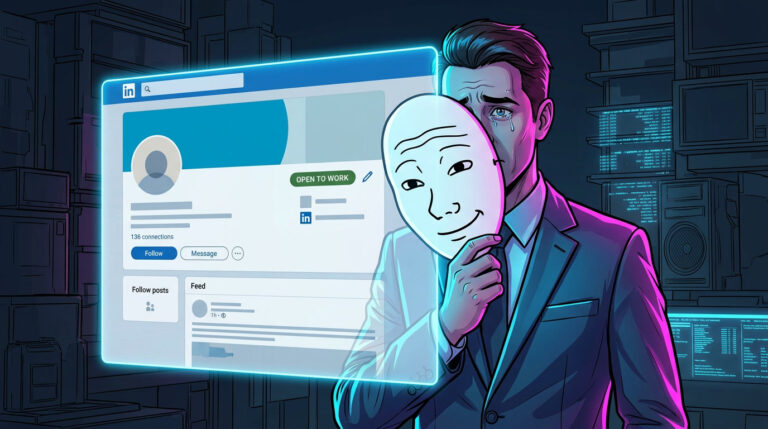
Today, the question “How to remove my personal data from the Internet?” is not only asked by cybersecurity specialists, but also by ordinary users. The reason is simple: every day, we leave digital traces, we register in applications, post photos, make online orders. And this data often remains available even when we forget about the service.
The growth of leaks also plays a role. Social networks and large companies are regularly hacked, and millions of names, addresses, and passwords are publicly available. Therefore, the issue of privacy is no longer an option, but a necessity.
It is important to understand that it is impossible to delete everything completely. But you can remove unnecessary information, minimize risks, and control what the Internet stores about you. And this is already a huge step forward.
What Counts as Personal Data Online?
Before asking “How to remove personal data from the Internet?”, it is useful to understand what exactly is considered “personal data”.
- The obvious: name, address, phone, passport data, photos.
- Less visible: accounts, search histories, geolocation, stored cookies.
- Hidden: advertising identifiers, device data, digital browser fingerprints.
All of this together forms your digital profile. Sometimes people think that deleting a couple of photos from Facebook is enough to solve the problem. But in reality, your data can be stored in dozens of places, from forums and online stores to advertising broker databases. So when you ask, “What counts as personal data online?”, the correct answer is: anything that can be used to identify you.
Browsers always collect data about you. To find out how websites track you beyond your IP feel free to check our article about it.
First Step: How to Remove Personal Data from the Internet Manually
Removing data manually is the first and most accessible step. This is where you should start if you’ve asked yourself, “How can I remove my personal data from the Internet manually?”
- Deleting old accounts. Remember all the services where you’ve registered in the past, such as forums, online stores, and music apps. Many of these services offer a Delete Account feature or the option to close your profile.
- Cleaning up your social media accounts. Check Facebook, Instagram, LinkedIn, and Twitter. Remove any photos, old posts, or tags on photos that you don’t want to associate with yourself.
- Using privacy tools. Almost every platform has privacy settings: limiting search engine indexing, hiding your profile from strangers, and preventing third-party apps from collecting information.
This process is not quick: each service has its own rules. However, it answers the key question: “How to remove all personal data from the Internet?” starting with your own digital space, step by step.
How to Remove Personal Data from Google Search
When people first ask themselves “How to remove personal data from Google?”, they most often mean the search results. Google indexes billions of pages, and if your name or photo appeared there, it can be stored for years.
- Request for removal through Google Form. Google has a special form “Remove Content” (support.google.com/legal). With its help, you can apply for the removal of pages that contain your personal data, such as your address, phone number, or bank details.
- Removal of cache and outdated content. Even if the data on the website has already been removed, a copy of the page may still be stored in Google’s cache. To address this, there is a separate tool called Remove Outdated Content.
- When Google actually removes links. It’s important to understand that Google doesn’t remove everything. Data is removed if it poses a risk of identity theft (such as document numbers) or violates privacy policies. But if it’s just an unpleasant article mentioning your name, the search engine won’t hide it.
That’s why the question “What is Google reCAPTCHA? ” is often asked alongside this one, as both are related to security, but one focuses on verification and the other on protecting your data in the index.
How to Remove Personal Data from Google Services
It’s worth discussing Google’s own services separately. Even if you remove links from search results, information may still remain in the company’s applications. Here comes the question: “How to remove personal data from Google services?”
- Google Maps. Remove saved addresses (home, work), route history and place marks.
- Google Photos and Google Drive. Review old photos and documents – especially scans of passports or contracts. What is convenient to store “in the cloud” can become a find for intruders.
- Search and YouTube. Clearing search history, views and recommendations helps to minimize the digital footprint.
- My Activity. This is the central place where Google stores all your activity: queries, apps, voice commands. In the section myactivity.google.com you can delete everything or set up auto-cleaning.
So you’re taking a real step towards answering the question “How to remove personal data from Google?” and you have better control over what the world’s largest search engine keeps about you.
Professional Services: How to Remove All Personal Data from the Internet
If, after the manual steps and working with Google, you are still thinking: “How to remove all personal data from the Internet?”, it is worth considering professional services.
- What kind of services are these? Companies like DeleteMe, OneRep, and Incogni specialize in sending requests to websites and data brokers that collect and sell information. They send out removal requests en masse and monitor the result.
- Pros and cons. Plus, it saves time: manually sending dozens of emails to site administrators is tedious. The disadvantage is that it’s paid, and no one gives a 100% guarantee: some sites ignore requests or publish data again.
- What does it really mean to “remove all personal data from the Internet.” It is impossible to completely disappear. The Internet is designed so that your footprints remain. But professional services can reduce the presence of your data in public databases and remove it from search results.
In other words, this is not a magic “erase everything” button, but rather a smart strategy for minimizing risks and managing the digital footprint.
How to Remove Personal Data from iPhone
Many people ask a separate question: “How to remove personal data from iPhone?” After all, a smartphone is the main center of personal information: photos, notes, contacts, browser history. And all this can end up on the network or with advertising trackers if you do not take measures.

- Cleaning Safari. Go to Settings → Safari → Clear History and Website Data. This will delete the history of visited sites, cache and cookies that store your habits.
- App Tracking Transparency. Apple has added a feature that allows you to limit app tracking. In Settings → Privacy → Tracking, you can disable access to the IDFA (advertising identifier).
- Advertising ID Reset. Even if your permissions are limited, it’s a good idea to reset your advertising ID to prevent your data from being associated with past activities.
- iCloud Data Deletion. iCloud often stores notes, photos, and documents. Consider which data you truly need in the cloud and which should be permanently deleted.
This way, you get a practical answer to the question “How to remove personal data from iPhone?” and reduce the digital footprint that your phone sends to the network.
Social Media Cleanup: A Critical Step
Even if you’ve learned how to remove personal data from the Internet, social media remains the most prominent source of information. This is where people often post photos, mark locations, and write posts, only to forget about them.
- Removing photos and posts. Review old posts. There may be personal data there – car number, home address or work documents in the photo. All this is worth deleting.
- Closing profiles from search engines. In the settings of Facebook and LinkedIn, you can remove indexing so that your profile does not appear in Google. This is a small step, but it reduces the likelihood of random people finding your page.
- Checking old accounts. Reddit, Twitter (X), LinkedIn, even forgotten music or game profiles may still contain your email or photo. Go in, check and delete.
Contacting Websites Directly
Sometimes, a simple cleaning of accounts and social networks doesn’t help. Your data may end up on aggregator sites, forums or even in a leak database. In such cases, the only reliable way is to contact website owners directly.
- GDPR and the right to delete data. In Europe, there is a “right to be forgotten” Article 17 GDPR. This means that you can request the deletion of data if it is not needed for the operation of the service. Similar laws are also starting to appear in the United States and other countries.
- How to send requests to administrators. The site usually has a Contact us or Privacy policy section. There is an email address for privacy requests.
- Examples of emails and the confirmation process. It is important to specify clearly in the letter: who you are, what data you want to delete (such as a phone number or photo), and a link to the page where the data is published. Sometimes, administrators may ask you to prove your identity before processing your request.
This step is especially important if you are wondering, “How can I completely remove my personal data from the internet?” Without direct contact with the websites, it can be challenging to remove data from other people’s databases. If you want to know why websites check the IP of their visitors you can check our atricle.
How Data Brokers Collect and Sell Information
If you once asked yourself: “How to remove all personal data from the Internet?”, you should definitely learn about data brokers. These are companies that collect and resell information about users.
- Who are data brokers. These are intermediaries working in the shadow of the Internet. They get data from open sources (social networks, government registers, leaks), buy databases from partners and then resell them to advertisers, credit institutions or marketing agencies.
- Why your data may be on dozens of websites. Once you leave your email or phone number when registering on a little-known website, you already risk getting into the data exchange system. As a result, when searching for your name, you can find dozens of pages with personal information.
- How to send an opt-out request. Most major data brokers are required to provide the option of “opt-out” – refusal to process data. Their websites usually have a form for requesting deletion. This is not a fast process, but if you want to answer the question “How to remove personal data from the Internet effectively?”this step cannot be ignored.
Preventing Future Exposure
Deleting data is half the battle. But if you don’t change your online behavior, you’ll soon have to find the answer to the question again: “How to remove my personal data from the Internet?” Therefore, it is important to learn how to prevent leaks in advance.
- Privacy settings in browsers and applications. Enable Do Not Track, limit cookies, and use advanced protection modes.
- Using VPNs and tracker blockers. A VPN hides your real IP address and makes requests anonymous, while blockers prevent surveillance through advertising networks.
- Minimizing the publication of personal data. Think twice before sharing your phone number or passport photo on messengers, forums, and social media. What you don’t publish yourself will never get into the databases.
Thus, preventing future exposure is a way to stop asking “how to remove personal data” endlessly and instead minimize its appearance on the network.
Legal Options: Your Rights to Remove Personal Data
In some cases, it is impossible to manually clean up traces, and then data protection laws come to the rescue. This is where it is worth asking: “What are my legal options to remove personal data from the Internet?”
- GDPR (Europe), CCPA (California), and similar laws. These acts establish users’ rights to access, modify, and delete their data. For example, the GDPR includes the “right to be forgotten,” while the CCPA allows you to prohibit the sale of your data to third parties.
- How they help you delete information. If a website operates in Europe or the United States, you can officially request the deletion of your data, and the website owner must comply with your request within a specified timeframe.
- When it makes sense to consult legal professionals. If you encounter serious data breaches, reputational risks, or refusal to delete your information, it is advisable to seek the assistance of cyberlaw experts. Lawyers will help not only speed up the process, but also to achieve compensation.
It is this step that turns the question “How to remove personal data from the Internet?” from a personal task into a legally supported demand.
How to Remove My Personal Data from the Internet Conclusion
Many people think that it’s enough to “clean” social networks once or send a request to Google and the question is “How to remove my personal data from the Internet?”it will be solved forever. In fact, this is a process that requires constant attention.
We live in an era where every registration, every photo, and even a one-time comment form your digital footprint. Yes, you can remove personal data from Google, delete old accounts, clean your iPhone, and even order services from professional companies. But if you keep posting too much information, it will end up in databases and search engines again.
Therefore, the main conclusion is as follows: “How to remove all personal data from the Internet?” is not a one-time task, but a habit. Regular checks, minimizing publications, and proper privacy settings will help you control what is known about you.
Ultimately, the question “How to remove my personal data from the Internet?” is not only about technology, but also about feeling in control of your own life. Being able to manage your digital footprint gives you the confidence that your data belongs to you, not the internet.
Frequently Asked Questions
How to remove your information from the internet
Start by deleting old accounts, cleaning social media, and using tools like Google’s removal request form or services such as whoerip.com for privacy checks.
How to get your information off the internet
Contact websites directly, use “opt-out” forms on data broker sites, and request removals from search engines like Google.
How do I remove my private information from the internet
Delete sensitive content from your accounts, adjust privacy settings, and file removal requests under laws like GDPR or CCPA if they apply.
How to clean up personal information on internet
Remove outdated profiles, clear cached data, delete cookies and histories, and use a VPN to reduce future tracking.
How to delete yourself from the internet
It’s nearly impossible to vanish completely, but you can minimize your digital footprint by closing accounts, removing data from Google, opting out of data broker lists, and limiting new exposure.