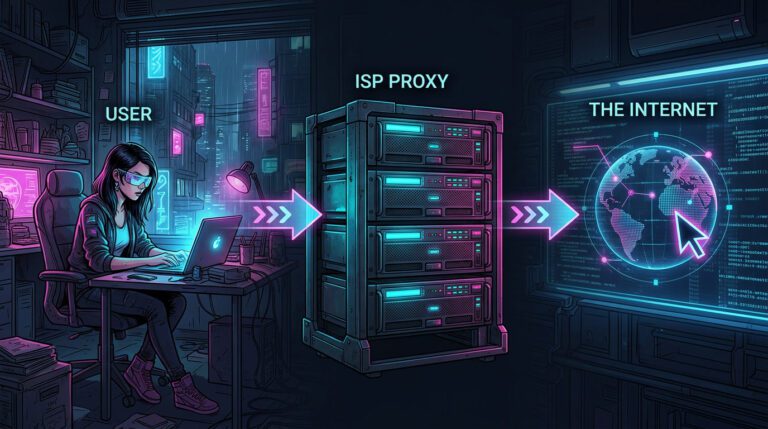
As projects grow, so do the requirements for proxy infrastructure. What starts with just a few IP addresses for basic tasks often expands into automation, multi-account management, market research, web scraping, and other workflows where a reliable network becomes essential.
However, many businesses still choose a proxy provider based on the same criteria they used years ago, focusing primarily on price or the size of the IP pool. This approach often leads to unstable performance, unexpected costs, and the need to migrate to another provider after only a few months.
Below are seven common mistakes to avoid when selecting a proxy service.
1. Choosing a Provider Based Only on Price
Price is important, but it should never be the only deciding factor. The cheapest proxies are not always the most cost-effective solution in the long run.
If the provider’s infrastructure cannot deliver stable performance, users may experience slow connections, limited location options, or the need to replace IP addresses more frequently. As a result, initial savings can quickly turn into additional operational costs.
When comparing providers, consider not only pricing but also infrastructure quality, available proxy types, and the level of customer support.
2. Ignoring IP Quality
The size of an IP pool does not necessarily reflect its quality.
It’s far more important to evaluate factors such as accurate geolocation, connection stability, and the overall reputation of the IP addresses. For many professional use cases, these characteristics have a much greater impact than the total number of available IPs.
Before deploying proxies, it’s also a good idea to verify that the reported location matches the selected country or region, especially when working with geo-specific services.
3. Using the Same Proxy Type for Every Task
Each proxy type is designed for different use cases.
For example:
- Residential proxies are commonly used for account management and services that require natural-looking traffic.
- ISP proxies combine high speed with long-term stability, making them suitable for persistent sessions.
- Mobile proxies are ideal for tasks that require traffic from mobile networks.
- Datacenter proxies are often preferred for high-volume operations where performance and scalability are priorities.
| Proxy Type | Best For | Key Advantages |
| Residential | Multi-account management, automation, social media, localized browsing | High trust level, real residential IP addresses, broad geographic coverage |
| ISP | Long-term sessions, account management, business automation | High speed, stable connections, dedicated IPs |
| Mobile | Mobile app testing, mobile-specific workflows, social media automation | Traffic through real mobile networks, high authenticity |
| Datacenter | Web scraping, SEO monitoring, market research, high-volume requests | Fast performance, scalable infrastructure, cost-effective |
Using a single proxy type for every workflow is rarely the most efficient approach.
4. Overlooking Geographic Coverage
Many businesses operate across multiple countries and regions. If a provider offers only a limited selection of locations, it may become a bottleneck as your project grows.
Before choosing a provider, make sure the required countries are available. If your use case demands it, check whether city-level targeting or ISP selection is also supported.
5. Not Evaluating Network Performance
Even high-quality IP addresses cannot compensate for an unstable infrastructure.
Pay attention to connection speed, response time, uptime, and overall network reliability. These factors directly affect the efficiency of automation, web scraping, SEO monitoring, market research, price tracking, and many other professional workflows.
6. Not Planning for Future Growth
Business requirements rarely stay the same.
A project that uses only a handful of IP addresses today may require hundreds or even thousands in the future, along with additional countries and different proxy types.
If your provider cannot scale with your business, migrating your infrastructure later can become both expensive and time-consuming.
Choosing a provider with flexible scaling options helps avoid unnecessary disruptions as your project expands.
7. Not Researching the Service Before Buying
Pricing should not be the only thing you evaluate before making a purchase.
It’s worth checking:
- available proxy types;
- supported countries and locations;
- supported protocols;
- documentation quality;
- technical support;
- available payment methods.
The more transparent a provider is about its infrastructure and services, the easier it is to make an informed decision.
How to Avoid These Mistakes
The best way to choose a reliable proxy provider is to evaluate the service as a whole rather than focusing on a single factor.
Compare providers based on IP quality, proxy types, geographic coverage, network performance, scalability, and customer support.
For example, MangoProxy offers Residential, ISP, Mobile, and Datacenter proxies with coverage in more than 200 countries and regions. The platform supports a wide range of professional use cases, including multi-account management, automation, web scraping, SEO, and marketing analytics.
Special Offer for WhoerIP Readers
Use the promo code WHOERIP to receive 8% off Static ISP Proxies from MangoProxy.
Conclusion
Choosing the right proxy provider has a direct impact on the stability and long-term success of your projects. Price alone should never be the deciding factor. Instead, focus on IP quality, geographic coverage, network performance, scalability, and the overall reliability of the service.
Taking a comprehensive approach when evaluating proxy providers can help reduce unnecessary costs, avoid common issues, and build an infrastructure that continues to perform as your business grows.